
What Is Emergency Home Care and How Quickly Can It Start?
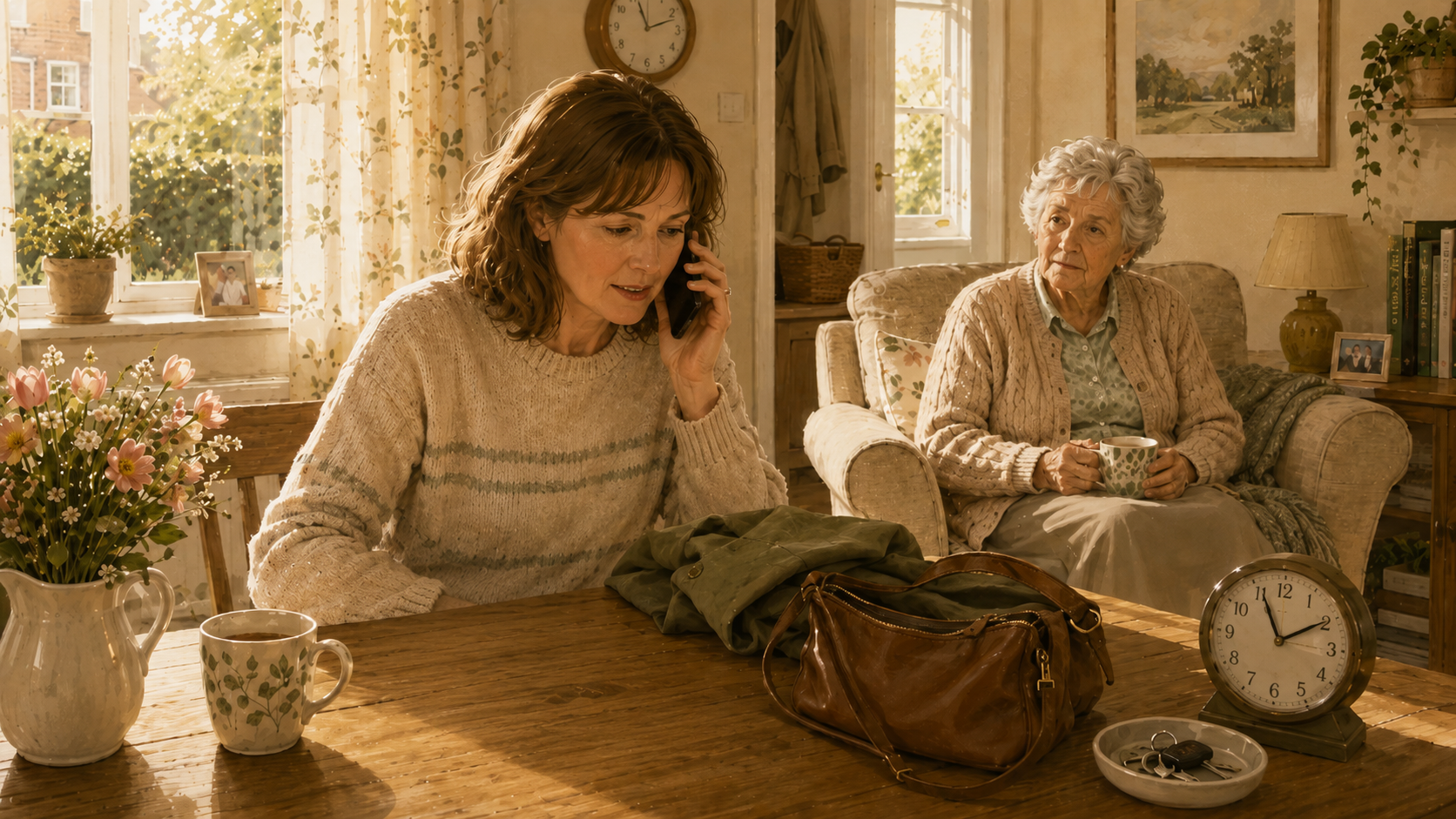
Most families discover emergency home care when they need it, not before. A parent falls. Someone is discharged from hospital sooner than expected. A family carer suddenly becomes unwell. A dementia situation escalates over a weekend. Whatever the trigger, the question becomes urgent very quickly: how do we get the right kind of help, fast, in our loved one's own home?
This guide explains what emergency home care actually is, when it's used, what it covers, and how quickly it can realistically be arranged. The intention is to help you make a calm decision in a moment that rarely feels calm.
What is emergency home care?
Emergency home care is short-notice home care support designed for urgent or unexpected situations. It is delivered in the person's own home, by a professional carer, and can range from a few visits a day to overnight support or short-term live-in care, depending on what's needed.
The “emergency” in the name doesn't mean clinical emergency. It refers to the timing rather than the nature of the support. The care itself is the same kind of practical, daily support delivered by any home carer, just arranged at speed and often without much notice.
It is a deliberately flexible model. Many families use emergency care as a short-term bridge for a few days or weeks while a situation settles, then stand it down once the immediate crisis has passed. Others find that what started as emergency cover becomes the start of an ongoing arrangement, particularly when the carer has worked well with the family, and there is a longer-term need underneath the short-term one. Both are normal. You are not committing to anything by making the call.
When might someone need emergency home care?
A handful of situations come up over and over again.
After a hospital discharge
Returning home after illness, surgery, or a sudden hospital stay is one of the most common triggers. Hospitals often discharge people as soon as they're medically ready, which is not always the same thing as being practically ready to manage at home. Temporary support with medication, mobility, meals, and personal care can be the difference between a smooth recovery and a return trip to A&E. Most families arrange this for a few days to a few weeks while their loved one gets back on their feet, then either taper it down or move to an ongoing arrangement if it has proven useful. For more on this, see our guide to post-operative care.
After a fall or sudden illness
A fall can change someone's confidence and mobility overnight. Even where no major injury results, the period afterwards often involves reduced mobility, temporary weakness, increased safety risk, and a family who needs immediate reassurance that someone is keeping an eye on things.
When a family carer suddenly becomes unavailable
Family carers are people too. Sudden illness, work emergencies, travel, or burnout can leave someone unable to provide their usual support at very short notice. Emergency home care covers the gap so the person being cared for is safe and the family carer can deal with what they need to. This overlaps with respite care, though respite is usually planned in advance rather than arranged in a hurry.
During a dementia-related crisis
Sometimes a person living with dementia goes through a period of increased confusion, leaving the home unaccompanied, behavioural change, or sudden decline that the family cannot safely manage alone. Quick access to a dementia-experienced carer can stabilise the situation in the home rather than forcing an avoidable hospital admission.
When existing care arrangements break down
A regular carer is suddenly unavailable. An agency cancels. A planned package falls through. Emergency cover steps in to fill the gap until the longer-term arrangement is back in place.
What does emergency home care include?
The content of the support is essentially the same as standard home care, just arranged faster.
Personal care support
Help with washing, dressing, toileting, and moving safely around the home. This is often the bedrock of post-discharge or post-fall recovery.
Medication reminders and routines
Keeping someone on track with new or existing medication is one of the highest-value pieces of support in the first days back from hospital, when prescriptions have often changed, and confusion is common.
Meal preparation and hydration support
Preparing meals, encouraging regular eating and drinking, and supporting recovery through good nutrition. Appetite often drops sharply after illness or surgery, and gentle prompting matters.
Companionship and reassurance
A stressful situation is less stressful with the right person in the room. Calm company, conversation, and a steady presence can do a lot for someone (and a family) under pressure.
Overnight or live-in support
Where a single daily visit isn't enough, emergency cover can scale up to overnight care or short-term live-in care to manage the period until things stabilise.
How quickly can emergency home care be arranged?
Faster than most people expect, and slower than most people want.
Good providers can usually start within 24 to 72 hours of an initial conversation, sometimes the same day for straightforward situations. The variables are:
Where you are. Carer supply differs by area, and some postcodes have more local carers ready to start than others.
What's needed. Daily visits are easier to arrange at short notice than live-in care or waking nights.
The complexity of the case. Someone with advanced dementia or complex medical needs requires a more specific match, which takes a little longer.
When you call. A Tuesday morning is easier than a Sunday evening, although urgent calls outside hours are still handled.
The single best thing you can do is make the call early. Once a provider is aware of the situation, they can start matching even if the start date is still a few days away.
Who can benefit from emergency home care?
The people who need emergency care are not always the people you'd expect. The most common situations are:
Older adults returning home after a hospital stay
People recovering from a fall or sudden illness
People living with dementia going through a difficult period
Families where the usual family carer is suddenly unable to continue
People who are temporarily unable to manage independently after a setback
The benefits of receiving urgent care at home
The main reason families choose emergency care at home rather than a temporary care home stay is that home is what works best for most people in a crisis. The benefits tend to compound:
Remaining in familiar surroundings, which reduces stress and confusion
Less disruption to routines, which often helps recovery directly
Faster emotional adjustment after hospital discharge
Continuity for family members who can visit without making a journey
The option to extend the care into something ongoing if it turns out to be useful
Emergency home care vs going into a care home temporarily
A short residential stay can sometimes be the right answer, particularly where round-the-clock nursing supervision is genuinely needed. But for most short-term recovery situations, the benefits of staying at home outweigh the benefits of a temporary placement.
The home environment is calmer, more familiar, and easier to recover in. The one-to-one ratio of a home carer means more attention and a relationship with one person rather than many. Recovery times tend to be shorter when people are in their own bed, eating familiar food, with their own things around them.
The right choice depends on the medical picture and the practical realities. For most stable, non-clinical situations, home is the answer.
How Gladys supports families with emergency home care
At Gladys, we can provide responsive home care for short-notice and urgent situations, including visiting care, overnight, and live-in cover. Most arrangements can be in place within a few days, often sooner for straightforward cases. Our record is three hours from the first call to a carer at the door.
Everyone we introduce has an enhanced DBS check, is insured, and has been personally interviewed by our team. Because we match the person rather than rotating a roster, the carer in an emergency situation can often become the ongoing carer if the family wants to continue.
If the situation is one we can't help with safely or quickly enough, we'll be honest about it on the call and point you in the direction of someone who can. Time matters in these moments, and we'd rather be useful by being clear than waste a day of yours.
Find out how Gladys works → or get in touch to talk through your options →.
Final thoughts
Unexpected care situations rarely come at a good time, and they rarely give you long to think. The most useful thing to know in advance is that calm, professional support at home is genuinely available at short notice and tends to work better than the more dramatic alternatives.
If you're somewhere between things being difficult and things being a crisis, make the call now rather than later. It will be easier to organise and easier on the person you're worried about.
