
What Does Personal Care at Home Actually Include?
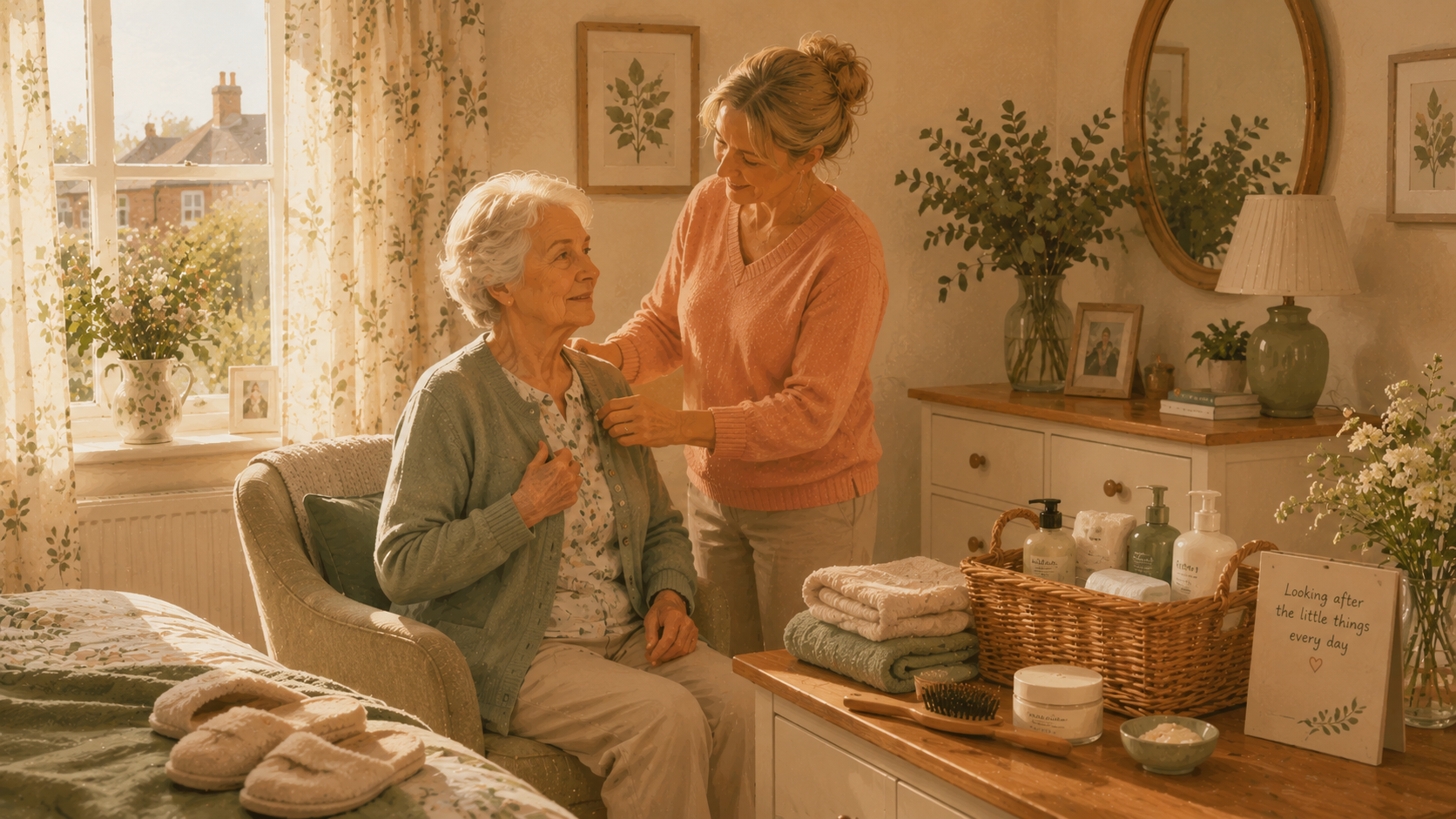
“Personal care” is one of those phrases the care industry uses constantly without ever really taking a moment to pause and explain what it actually means. For most families, it sounds either clinical or unclear, and that vagueness can make people uneasy about asking for it.
In practice, personal care at home is one of the most useful and least intrusive forms of support available. It's the everyday help that lets an older person stay in their own home with their dignity and routines intact, rather than reaching the point where bigger decisions become unavoidable.
This guide explains what personal care actually covers, who tends to benefit from it, how it's delivered, and how to have the conversation with a parent who isn't sure they want help yet.
What is personal care at home?
Personal care at home is professional support with the daily activities that keep someone safe, well, and comfortable. It's delivered in the person's own home rather than in a care setting, and it's built around their individual routine rather than a standard timetable.
It can range from occasional visits, perhaps a couple of mornings a week, to multiple daily visits or overnight support. The support is personalised: the things one person needs help with might be very different from those of another, and good providers shape the support around the individual rather than asking them to fit a template.
What does personal care at home include?
The specific tasks vary by person, but most personal care arrangements draw from the same broad menu.
Help with washing and bathing
Support with showering or bathing safely, washing hair, maintaining good hygiene routines, and doing all of it in a way that preserves the person's dignity. For many older people, the worry isn't the washing itself: it's the loss of independence that comes with it. A good carer is steady, unhurried, and respectful.
Support with dressing and grooming
Help getting dressed in the morning and changed in the evening. Hair care, oral hygiene, shaving, and choosing appropriate clothing for the weather or the day's plans. This often makes a real difference to how someone feels about themselves at the start of the day.
Toileting and continence support
Discreet, respectful assistance getting to the toilet, managing continence products if needed, and keeping the person comfortable. This is one of the areas families often find hardest to discuss, but it is also one of the areas where professional support makes the biggest difference to quality of life.
Medication reminders and support
Gentle prompts to take medication at the right time, support following routines, and helping to reduce missed doses. Carers cannot administer medication clinically (that is a nursing task), but they can do everything around it.
Mobility and moving safely around the home
Support standing, walking, and using stairs safely. Help with getting in and out of bed or up from a chair. Falls prevention is woven through all of this, particularly for anyone who has had a fall before or is recovering from illness.
Meal preparation and hydration support
Preparing meals to the person's taste, encouraging regular eating and drinking, supporting nutritional needs, and monitoring whether the person is eating enough. Not eating well is one of the most common quiet signs of decline.
Companionship and emotional support
A conversation over a cup of tea, reassurance when someone is anxious, and patient company throughout the visit. This sits alongside everything else rather than being a separate task, and it's often the thing that both the client and the carer end up valuing most.
Who might benefit from personal care at home?
Personal care isn't only for people with advanced needs. It often works best when introduced gradually, before things become difficult.
It tends to help:
Older adults who are managing but finding daily tasks slower or harder than they used to be
People recovering after surgery or a hospital stay
Anyone with mobility issues that make personal care tasks risky on their own
People living with dementia
Those managing long-term conditions like Parkinson's, MS, or arthritis
Families who need extra support around a primary carer
How personal care helps people stay independent
This is the part that often surprises families. Personal care is not the beginning of losing independence. For most people, it's the opposite.
Receiving the right level of support means staying in familiar surroundings, keeping daily routines, maintaining the confidence to do the things you can still do, and avoiding incidents (a fall, a medication mix-up, a missed meal) that often force bigger changes. It buys time. It brings comfort. And in many cases, it buys years of living well at home.
Common concerns families have about personal care
In our experience, most families arrive at the personal care conversation with three main concerns. Each one is worth taking seriously, and each one usually has a straightforward answer.
“My parent doesn't want help”
This is almost universal. The instinct to refuse help is rarely about the help itself. It's about what accepting it might mean: a loss of independence, the end of being able to manage on their own, the start of needing more.
The best way through is usually a gentle, gradual introduction. A few hours a week, framed around something specific (“a bit of help with the bathing in the mornings”), rather than a wholesale switch. Many people who initially resisted become the first to say the carer is the best part of their week.
“Will personal care feel intrusive?”
Good personal care does not feel intrusive. It feels like having someone steady and respectful around for a couple of hours, who knows what they're doing and doesn't make a fuss. Carers protect privacy, work at the person's pace, and adapt to comfort levels. If someone wants to be left to do part of a task themselves, that is what happens.
“How much support can someone receive?”
As much or as little as is useful. Personal care can be one short visit a week, daily morning and evening visits, longer blocks for more complex needs, or temporary support for a few weeks while someone recovers from an illness or operation. Most arrangements evolve over time as needs change, and a good provider will adjust without making it a process.
Personal care after hospital discharge
The period after a hospital stay is one of the most common moments when families realise personal care would help. Recovery is rarely linear, and the small things (washing, dressing, getting up and about safely, taking medication on schedule) can be exactly the things that determine whether someone recovers well or ends up back in hospital.
Short-term personal care after discharge can reduce fall risk, support medication routines, and rebuild confidence after illness or surgery. Many families bring a carer in for a few weeks while their loved one gets back on their feet, then taper down or stop entirely. It does not have to be a permanent arrangement to be useful. For more on this, see our guides to support after hospital discharge and recovery at home after a hospital stay.
Personal care for people living with dementia
For someone living with dementia, the value of personal care is partly the practical help and partly the consistency. The same friendly face arriving at the same time, working through familiar tasks in a familiar order, can be enormously calming.
Gentle support with everyday tasks, delivered without rushing, helps reduce confusion and anxiety. Trust builds slowly through repetition. This is one of the reasons we match families with the same carer wherever possible rather than rotating a roster.
How to arrange personal care at home
How you arrange personal care depends on the kind of provider you go to. Traditional home care agencies typically run a formal needs assessment, build a written care plan, and then schedule whichever carer is available against those visit slots. Introductory agencies like Gladys work differently: we start with a proper conversation to understand the background, then introduce you to a local carer we think will suit your family. You'll get to meet them face to face before anything begins, and you decide whether using them feels right.
A few things help, whichever route you choose:
Start with a real conversation. What is your loved one finding harder than they used to? What time of day is hardest? Are there specific tasks (the morning routine, an evening unwind, a weekly bath) where help would land best?
Share the practical details early. Routines, mobility, medication, dietary needs, any quirks worth knowing. With Gladys, this is passed to the carer before they meet, rather than formalised as a clinical document.
Meet the carer before anything starts. A good introduction is the single biggest predictor of how the rest goes. If something feels off, say so.
Begin small. Most successful arrangements start with a couple of visits a week and grow from there, rather than going straight to a full schedule.
How Gladys provides personal care at home
At Gladys, we match families with professional local carers who provide personal care at home. Visits start from around £32 an hour, and because we operate as an introductory agency rather than a managed care company, families typically pay around 30% less than they would with a traditional agency.
Everyone we introduce has an enhanced DBS check, is insured, and has been personally interviewed by our team. Carers are matched to your loved one based on personality and need, and you get the same person wherever possible, rather than a different face each visit.
If personal care isn't quite the right starting point for your situation, we'll say so and suggest a better one.
Find out how Gladys works → or get in touch to talk through your options →.
Final thoughts
Personal care at home is rarely the dramatic moment families fear it will be. It's more often the quiet, practical addition that lets someone keep living the way they want to live, for longer than they thought they would.
If you're at the stage of wondering whether a parent could do with a hand in the mornings, the answer is probably yes, and the right time to organise it is now, not later.
