
When a Parent Loses Their Partner
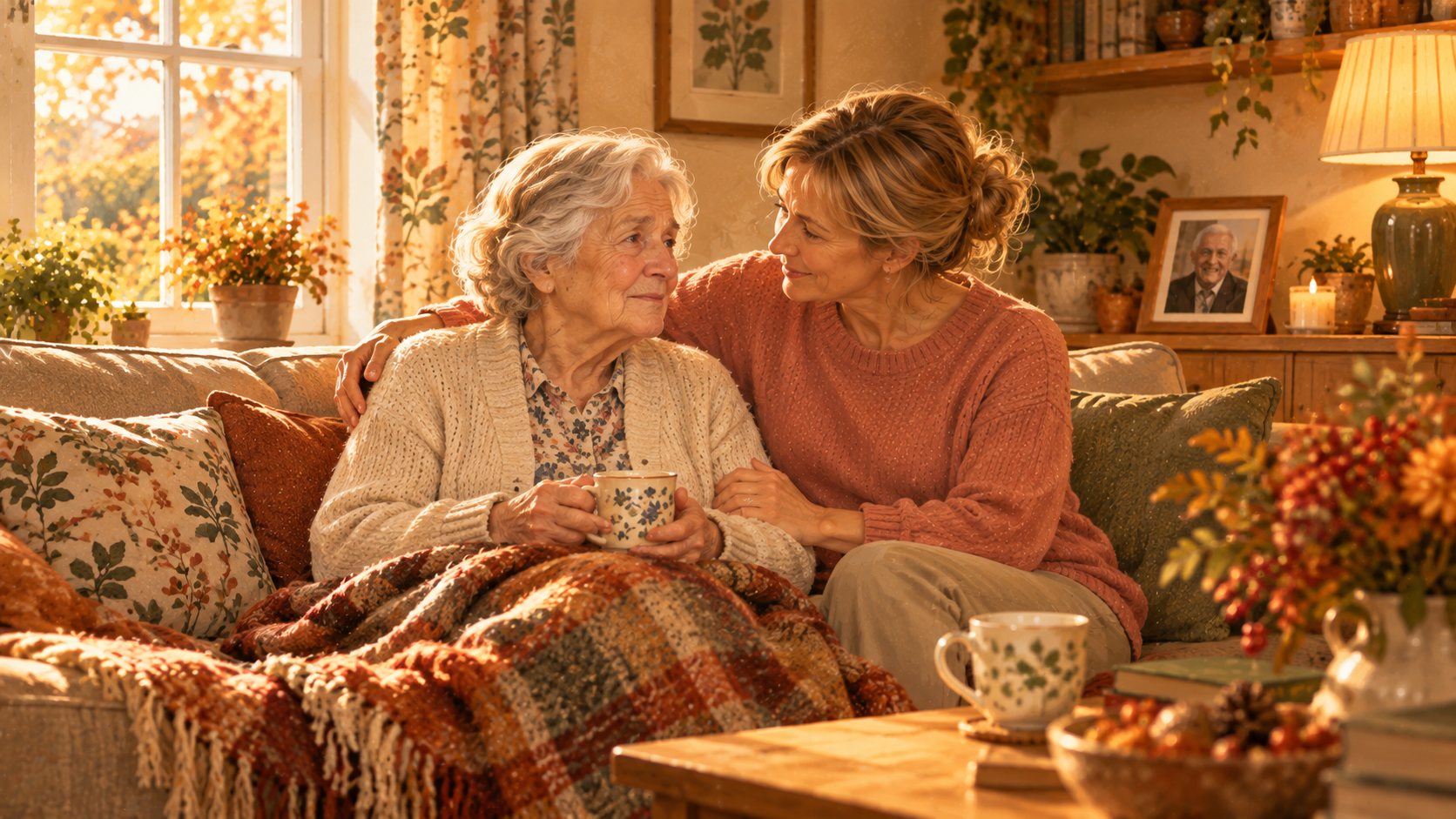
After fifty or sixty years together, the surviving parent is not simply sad. They have lost the person who did half of everything, who noticed when they were unwell, who filled the day with the ordinary business of being two people.
The practical loss and the emotional loss arrive at the same time, and the second one is what families are prepared for.
The first few weeks
There will be a great deal to do and a lot of people about. Registering the death, the funeral, the paperwork, visitors. Your parent is likely to seem as though they are coping, and quite often they genuinely are during this period, because there is structure and company.
What is worth knowing is that this is not the hard part.
The bit nobody prepares you for
About six weeks in, everybody goes home.
The cards stop, the visitors thin out, and the person is left in a quiet house with the rest of their life. Many families find the weeks that follow are harder than the first fortnight, and that is exactly when everyone has stopped ringing.
If you do one thing with this article, put a note in your calendar for two months after the funeral and ring them then.
What actually changes practically
This is the part that catches families out, because it is invisible at first.
Whatever the other one did, nobody is doing. In a lot of couples of that generation the division was absolute. One did the cooking, the other the driving. One managed the money, the other the appointments and the birthday cards. Whichever half your surviving parent did not do, they may never have done, and they may be quietly frightened of it.
Ask directly and gently: what did Dad always deal with? Then work out what happens to those things now.
Eating stops being a thing that happens. Cooking for one after decades of cooking for two is one of the habits most easily abandoned, and appetite drops with grief anyway. Weight loss after a bereavement is not unusual, and our guide to when an older parent stops eating properly covers what to look for.
Their own health gets ignored. Appointments missed, medication muddled, symptoms not mentioned. Sometimes because they cannot face it, sometimes because the other one always kept track.
The house may become unmanageable. Especially if the person who died did the maintenance, or if there was a period of caring beforehand and everything else was let go.
They may have been a carer. If your mum spent three years caring for your dad, she is not only bereaved, she is exhausted, physically run down, and has lost her purpose and her routine in one go. That situation deserves particular attention and it is frequently underestimated.
If you are trying to judge how much support your parent now needs, our guide to how much help your parent actually needs is a good place to start.
What helps
Regular, predictable contact rather than intense contact. A short call at the same time every day is worth more than a long visit once a month. Predictability is the thing.
Do not rush them into decisions. Especially about the house. Grief is a poor state in which to make an irreversible decision, and the common advice to avoid big decisions in the first year is sound.
Do not clear things out early. Or at all, unless they ask. Families sometimes tidy away clothes and belongings meaning to spare their parent pain, and it can feel like a second loss.
Help with the specific practical gap. Not general offers of help, which get declined. "I have set up the bills on direct debit" or "I have booked the car in for its MOT" is what actually lands.
Protect the routine, or build one. Something in the diary every week that is not family. A class, the church, the bowls club, a standing coffee with a neighbour.
Watch the drinking. Alcohol intake can rise after a bereavement and it is rarely discussed.
Let them talk about them. Families often avoid mentioning the person who died, thinking it will upset their parent. Many bereaved people want to talk about their husband or wife and find the silence around them worse than the sadness.
When grief becomes something else
Sadness, crying, difficulty sleeping and loss of appetite are all normal for months. It is worth a GP appointment if you are seeing:
No improvement at all after several months, or a clear worsening.
Weight loss that is continuing.
Withdrawal from everything and everyone.
Not getting dressed or leaving the house at all.
Talk about having nothing to live for.
New confusion, which may be physical rather than emotional in origin. Our guide to sudden confusion in an older parent explains why.
Depression in older people is often mistaken for understandable grief, and it responds to treatment.
If you are worried about your parent's safety, or they talk about not wanting to go on, do not wait. Speak to the GP the same day. Samaritans are available on 116 123 at any hour, for them or for you.
Where to get support
Cruse Bereavement Support runs a national helpline and local services and is the main organisation for this in the UK.
The GP can refer for bereavement counselling.
Age UK runs befriending in many areas, and many towns have groups for widowed people, which people are often reluctant to try and frequently find more useful than expected. Our guide to loneliness in older people has more on what tends to work.
Marie Curie publishes good practical guidance on the period after a death.
Looking after yourself
You have also lost a parent. It is remarkably common for the surviving parent's needs to absorb everything and for the adult child's own grief to go unattended for a year or more.
If you are holding everything together for everyone, that is worth acknowledging rather than pushing through.
If they need more help than the family can give
Families often come to us in the year after losing a parent. Sometimes what is needed is company and a routine rather than care, and someone reliable coming in each week through companionship care can rebuild a structure that has collapsed. There is no obligation in talking it through, and nobody will chase you.
